info@kaizendentalhawaii.com


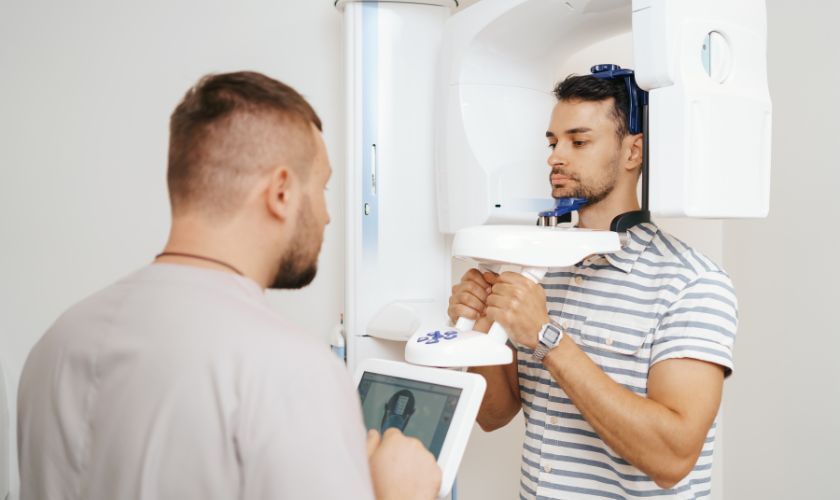
If you’ve ever been to the dentist, chances are you’ve had a dental X-ray. While some people may dread these screenings, X-rays play an essential role in helping dentists detect oral problems that might not be visible during a routine checkup. Here are the reasons why dental X-rays are crucial for maintaining good oral health and ensuring your beautiful smile lasts a lifetime!
What are X-Rays?
X-rays are a type of electromagnetic radiation. Electromagnetic radiation is a form of energy that travels through the air and interacts with matter. X-rays are a type of high-energy electromagnetic radiation. This means that they have more energy than lower-energy waves like radio waves and microwaves.
When x-rays interact with matter, they can cause it to emit secondary x-rays. These lower-energy secondary x-rays can be detected by special film or digital sensors in much the same way as traditional photography. However, because x-rays have so much more energy than other types of electromagnetic radiation, they can penetrate deep into the human body, which makes them useful for diagnostic imaging.
X-rays are often used to image bones and teeth because they show up well on x-ray images. However, soft tissues like muscles and organs do not show up as well on x-ray images. This is why other imaging modalities like MRI and CT are sometimes used in addition to x-rays.
Identifying Tooth Decay and Infection
Tooth decay and infection can cause a lot of pain and discomfort. They can also lead to serious health problems if left untreated. That’s why it’s important to get regular dental checkups. During a dental checkup, your dentist will take x-rays of your teeth. These x-rays can help identify any areas of decay or infection. If your dentist finds any problems, they will work with you to develop a treatment plan.
Detecting Changes to Jaw Structure
Your dentist will use x-rays to evaluate the condition of your teeth and jawbone. X-rays can help detect cavities, infections, and other problems. They can also be used to monitor the progress of dental treatment.
Evaluating Tooth Alignment
When it comes to dental checkups, x-rays play an important role in providing your dentist with a clear picture of your teeth and their alignment. X-rays can help to identify any potential problems that may be developing, such as tooth decay or gum disease. They can also give your dentist a better idea of how your teeth are positioned and if they are overcrowded or misaligned.
If your dentist finds that your teeth are not aligned properly, they may recommend orthodontic treatment to correct the issue. Orthodontic treatment can involve the use of braces or other devices to slowly move the teeth into their proper position. In some cases, surgery may be necessary to correct severe misalignment.
Identifying Impacted Teeth
During a dental checkup, x-rays are taken in order to identify which teeth are impacted. Impacted teeth are those that have not erupted through the gum line or have only partially erupted. Many times, impacted teeth do not cause any symptoms and may go unnoticed. However, they can lead to problems such as infection, crowding, and damage to adjacent teeth. X-rays help dentists diagnose and treat these problems before they become more serious.
Diagnosing Tumors and Cysts
While dental x-rays are often used to check for cavities, they can also be helpful in diagnosing tumors and cysts. Oftentimes, these growths do not exhibit any symptoms, so they can go undetected until they show up on an x-ray.
X-rays allow your dentist to get a detailed look at the structure of your teeth and jawbone, which can help them spot any abnormalities. If a tumor or cyst is detected, your Honolulu dentist may recommend further testing or treatment.
Examining Periodontal Health
X-rays are an important tool for assessing periodontal health. They can help dentists identify areas of bone loss or pockets around the teeth where bacteria may be present. X-rays can also reveal any tooth decay that has developed beneath the gum line. In addition, dental x-rays can be used to check for signs of developing conditions such as impacted wisdom teeth or cysts.
Assessing Bone Loss Around Teeth
X-rays are an important part of a routine dental checkup. They help your dentist assess bone loss around your teeth and detect any problems that may not be visible on the surface of your teeth.
During a dental checkup, your dentist will use a small, hand-held X-ray machine to take pictures of your teeth. These pictures will be used to assess the health of your teeth and gums and to identify any areas of concern.
X-rays can help to detect problems such as tooth decay, gum disease, and infections. They can also help to identify the early stages of tooth decay so that treatment can be started before the problem gets worse.
Pinpointing Position of Teeth Root
The position of teeth roots is important for many reasons. For one, it can help determine if a tooth is healthy or not. If a tooth is not in the right position, it may be more likely to get cavities or other problems. Additionally, the position of teeth roots can impact how well a person can bite and chew their food. If teeth are not positioned correctly, it can make it difficult to eat and digest properly. Finally, the position of teeth roots can also affect a person’s appearance. If teeth are not aligned properly, it can give a person an uneven smile or unbalanced facial features.
Check for Damage After a Trauma or Injury
After a trauma or injury, it is important to check for damage. An x-ray can help to determine if there is any damage to the teeth or jawbone. If there is damage, a treatment plan can be made to repair the damage and prevent further complications.
FAQ
Why are X-rays important during a dental checkup?
X-rays help your dentist detect problems early before they become more serious. They can show cavities between your teeth that cannot be seen by the naked eye and show signs of gum disease. They can also help your dentist determine if there are any abnormalities in your jawbone or teeth development.
What are the risks of having an X-ray?
There are very minimal risks associated with having an X-ray. The amount of radiation you’re exposed to during a dental X-ray is very low and is not considered harmful.
Related Articles
[theme_related]
